Thursday, September 30, 2021

Campbeltown Night


The (hopefully) last Zoom tasting!

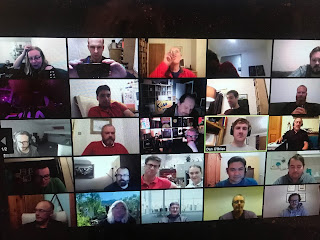
September's tasting was, we hope, the last of our regular monthly events to take place remotely via Zoom, at least for the time being. October would see us back in the surroundings of the Briton's Protection. But for this tasting, we had a range of premium whiskies from Campbeltown to try.

2x Springbank
Campbeltown was once the whisky capital of the world, but declined dramatically during the early part of the 20th century and there are now just three distilleries, although that is just enough for it to retain its designation as a whisky 'region' in its own right. Those are Springbank, Glen Scotia and Glengyle, and we had whiskies from each to try as part of the line up.

We started off with two drams from Springbank. The first was a distillery bottling under the Hazelburn brand, a single cask 15-year-old released in 2018. Somewhat unusually, it had full maturation in a Cognac butt.

This got the evening off to a strong start. A bit of a salty tang at first, and it gave way to a very thick, buttery finish. Beautiful all round. Some drinkers had to add a bit of water to fully enjoy it, and duly reported waves of flavour on the finish, along with a good mouthfeel.

Glen Scotia 17yo
It was just as well we got to enjoy it, because bottles are pretty scarce. It was originally £94 but one went for £250 at a recent auction. It was 53.9%.

For a counterpoint we moved onto a second Springbank, this time an eight-year-old aged in fresh sherry casks and bottled under the distillery's own name, from the Campbeltown Malts Festival 2019. This was sweet on the nose, so there was no mistaking the sherry. On the palate, we got tobacco, a real spicy, peppery taste, and overall it tasted quite dry. It was better with a bit of water, as that opened up the already impressive nose a bit further. Burnt toffee was one tasting shout at this point. In your face as a dram, but with a lot going for it.

We felt this didn't necessarily taste like an eight-year-old, but also that it might have improved still further with a bit longer maturation. We bought ours for £65 but at a recent auction it went for £275. It was 56.8%.

Glen Scotia 14yo
Leaving Springbank behind, we went to Glen Scotia for drams three and four. Number three was a 17-year-old, the Master Distillers Edition from 2020, aged in refill American oak. Many of us in the club are fans of the distillery's output today, it offers some good value drams, so we were looking forward to tasting this. Again, we were not disappointed!

There was a little bit of coconut in there, someone felt, and the nose and the finish were the high points, if anything a bit stronger than the actual bit in the middle. Some drops of water opened it up nicely. Some felt this was very slightly uninspiring compared with what had gone before, but others appreciated the subtletly of it. It was £170, and there aren't any more bottles available anywhere as far as we could tell.

Longrow 15yo
The other Glen Scotia was also from 2020, a peated bottling from that year's Malts Festival. It was a 14-year-old, with an American oak and port finish. There was a hint of peat but that was all, didn't hit as strongly as you might have expected. Certainly perfectly drinkable, maybe even more drinkable than some of the big hitters from the earlier in the tasting, but maybe less memorable as a result. Someone tried this with a bit of water and said it transformed the dram into something spectacular - "a taste explosion" - but a a few of us had foolishly finished ours before getting this advice!

It was 52.8% and cost £75 at the time, but the cheapest bottle we could find online today was going for £250.

Glengyle 5yo

We were back to Springbank for dram five, a 15-year-old Longrow, again bottled for the 2019 Malts Festival, and matured in first fill rum. This was slightly sweet on the nose, gentlre, although we weren't sure about the end of the finish - a bit bitter, or briney we felt. Not bad overall but not a hell raiser. No need to add any water here. This cost £75 at the time but is currently going for four times that online, and it was 52.4%.

And last it was off to Glengyle, the last of the trio of Campbeltown distilleries. Owned by J&A Mitchell, which also operates Springbank, it was revived early this century. Here, we were trying a 2021 distillery bottling under the Kilkerran name - the company was not able to re-acquire the Glengyle brand! - a five-year-old matured in fresh Oloroso sherry casks.

Custard, caramel, in fact a creme caramel, with burnt vanilla on the nose. A little young perhaps, a bit green, an instant alcoholic sort of a taste. Maybe a bit too young, although others thought it was really nice. Water killed it though! But still worth the £50 we paid for it, although it's now going for £100.

To the dram of the night voting then, and there was a rare victory for the opening whisky of the evening - dram number one!

Thanks to all club members for once again attending this virtual tasting and to the committee for assembling this terrific line up - a set of whiskies which would cost around £1300 to buy today.

Thursday, August 26, 2021

Against The Grain: A Grain Whisky Special

The grain whisky line up

For our tasting in August, we looked at one of the more forgotten areas of Scottish whisky: grain whisky. Simply put, grain whisky refers to any whisky made in part from grains which aren't malted barley, and can include grains such as corn, wheat, maize and rye.

Holyrood
We started off with something from the new Holyrood distillery in Edinburgh, the Scottish capital's first new opening in a century. In fact, what we were drinking was not actually produced there, as it's only been up and running since 2019, but was instead called Sweet Single Grain, bottled under licence using the name 'Holyrood Spirits Merchants' although we don't know where the spirit itself was produced.

It smelt nice, with a good nose all round. Something distinctive in the aftertaste, but we couldn't quite place it at first, although there was a shout for butterscotch. Coats your mouth nicely. As someone said: "not all that much to say about it, but it's lovely." From an AHC - alligator heavy char - cask, a fact which might explain the sweetness we all got. This was 46% and was a very reasonable £39.50.

Bramble Whisky Co
Onto dram number two and one of the biggest grain distilleries in Scotland, the North British. Jointly owned by Diageo and Edrington Group, it has an annual output of about 12 million litres, most of which ends up in a variety of well-known blends.

This particular bottle was from a small indie, the Bramble Whisky Company, associated with a local bar. It was four-and-a-half years old, a virgin oak single cask and, like the first bottle, we got ours online from Royal Mile Whiskies. It had plenty going on. We got fruitcake, root liqourice, and a generally quite earthy flavour. Interesting, different, enjoyable, and certainly unusual. One drinker asked whether it was aged in Listerine barrels, although others felt it was a bit on the sickly side. It's £57 and 46%.

Invergordon
We were off next to another big old grain distillery. This time it was Invergordon, today part of Whyte and Mackay. And in a bit of a surprise, we soon learned that we had in our hands the oldest whisky ever tasted as part of a club event. It was a bottling of a whisky distilled back in 1972, making it a 48-year-old when it finally went into the bottle: a rarity for many of us members to have a dram older than them! It was the work of another independent bottler, this time Thompson Brothers.

Pear drops on the nose here. Vanilla, caramel and then a bit of fruit. Tropical fruit in fact, like pineapple or even peaches. Some thought it had a bit of a 'meh' finish to it, but others felt it improved after a few sips. A touch spicy maybe, thought someone. Although a good dram, we probably wouldn't pay the £270 price tag again! It was 42%.

Port Dundas
Port Dundas in Glasgow used to be another big name in grain distilling, until the distillery was closed and demolished a decade ago, as owner Diageo looked to consolidate its grain output at Cameronbridge (more of which in a moment). Adam had chosen for us one of the later bottlings from the distillery, a 2009 10-year-old under the Cooper's Choice name, a mixture of American oak and Martinique rum casks.

And very nice it was too.  Very pleasant and memorable was the consensus, along with "grassy" and "earthy". With water in it became really good, perhaps indicating it was bottled a little too strong. And by too strong, we mean a very chunky 60.5%. At £57 though, we felt this was a bit of a bargain, a more than reasonable price for something like this.

Cameronbridge
Port Dundas may have gone but Cameronbridge endures. Located in East Fife, it's the largest grain distillery in Europe, producing 200 litres of the good stuff every minute. And we had another older whisky to try, this time a 36-year-old bottled by Bartels Whisky under the name His Excellency. Indeed, it was a cask strength version of a bottle we'd had before.

This had the nicest nose so far. Caramel, chewy, toffee apple, even fizzy cider. A bit rummy on the nose, we got some sweetness and molasses. Chewy - that word again - when tasted, a bit of water brought out more of the flavour. The finish was perhaps a little harsh, but was also thick and oily. For plenty of members, the clear favourite so far. It was 57.9% and cost us £78.

Loch Lomond

To finish, we took the high road, or perhaps by this time of the night it was more like the low road, to Loch Lomond. The distillery is known for being self-sufficient, in so far as it has its own malt and grain distillery. And we were trying a peated version of the Loch Lomond Single Grain.

This had an interesting nose. Irn Bru, fruits and spices, and just a bit peaty or smoky. A rabbit out of the hat suggested someone, and quite a few really enjoyed this. It's unusual to have a peaty grain, and on this occasion we were drinking what was effectively a single malt, but which was not distilled in the batch process but was instead made using the continuous Coffey still method so technically doesn't count as a single malt under Scottish rules. More's the pity, as not only was this a very good whisky, it was a total bargain at just £26. It's 46%.

And so we came to the dram of the night voting. And in an unprecedented development, we had a five-way tie! All the drams from two to six got the same number of votes, so we left it at that rather than trying to force a winner.

Thanks to all members for taking part via Zoom once again, and to Adam for selecting and running us through another great selection of drams!


Thursday, July 29, 2021

Rage Against The Maltchine


We went through the drams on Zoom

July's tasting was called Rage Against The Maltchine - a chance to try two different expressions from three lesser known distilleries.

Inchgower F&F
Each of the three distilleries is owned by spirits giant Diageo and their output mostly used in blends, so seeing them in their own right is a relative rarity. The main exceptions are for the company's Flora and Fauna range, which it uses to showcase several of its hidden gems, and a range of bottlings done by independents. So, for this tasting, we had three pairings of an F&F versus an indie to see which came out on top.

We started off with Inchgower, a Speyside that is a key component of Bell's. The F&F was a delicate dram, very nice, fruity and a bit salty as well. It was clear to see why it has been used for so long in a major blend, as we felt it had a little bit of everything and could accentuate other flavours really well. Or, as someone put it, "it's the whisky equivalent of Spanx". It's about £50 and is 43%.

Inchgower SMWS
Up against it was an Inchgower from the Scotch Malt Whisky Society, a bottling called Depth of Flavour. There was certainly a family resemblance on the nose. Like the last one but a bit more, well, "more-r" as someone suggested.

A little bit of water brought the pears out, along with a general fruitiness and a slightly tropical sense of banana. Most drinkers in the club seemed to think this was a bit better but, seeing as it was a cask strength SMWS and members generally prefer the high octane stuff, this wasn't exactly surprising.

The SMWS bottling was £61, and in the little mini vote of the two Inchgowers it won out 16-7.

Teaninch F&F
The next pairing was from the Teaninch distillery, a Highland which comes from a large facility in Ross. We started off with the 10-year-old F&F expression. There were cereal notes on the nose. Quite nice if a bit forgettable. As we got down to drinking it, we felt it was a bit sweeter than expected, but more of an orientation dram than anything else.

Not as good when you added water either. There were bits of barley sugar, a dryness, and a subtle and delicate creaminess going on, although even for the members who are fans of the more subtle drams this was on the delicate side. It didn't get a huge amount of love overall. £43 better spent elsewhere, we felt.

Teaninch Mey Selections
Next we had a 12-year-old independent bottling under the Mey Selections label. Oaky and dry, this was definitely better. There was something going on in the background on the nose but we couldn't quite put our finger on what. There was much more to get your teeth into on the palate though.

Cask strength for sure, and perhaps a bit too much of an alcoholic taste for some, there were some questions about whether it was really from the same distillery. One comment was: "One came out of the tap, the other was definitely whisky." It was 54% and £90, and although this got a general thumbs up, there was also agreement the price tag was a bit steep.

However, the Mey bottling beat the F&F by no fewer than 22 votes to 1!

Glenlossie F&F
Our last duo was from Glenlossie, a Speyside from close to Elgin. Much of it ends up in Haig Gold, a brand name which was particularly popular back in the 1970s. As for today's 10-year-old F&F bottling, this was great on the nose for a few of us, although some felt it was a bit 'meh' with less going on. Almost a bit reminiscent of the first Teaninch we tried, pleasant enough but a little nondescript.

It revealed itself a bit more after a couple of sips, so there was perhaps more going on than at first glance. Others also felt it was probably the strongest of the three F&F bottlings. It's £49.

The rival independent was a 22-year-old Carn Mor, under its Celebration of the Cask banner. This was certainly more popular, although a tougher choice than the other pairings because both it and number five were good in their own way.

Glenlossie Carn Mor
Leather and boot polish here, and a peppery flavour. It's 53.3% and £150: great but perhaps not three times as great as the F&F one we'd just had. Notwithstanding the price, the indie still took this round by 14 votes to 9 - the closest run battle of the evening.

In the overall dram of the night voting, dram 2, the SMWS Inchgower, took the title with eight votes, ahead of the Carn Mor which got six. And, as if all that voting wasn't enough, we found time for a tiny bit more democracy to finish the evening. In the overall consideration of Diageo v the Rest of the World, it was just two votes for the corporate Maltchine and 21 for Rage!

Thanks to Adam for co-ordinating the tasting and everyone who presented whiskies and took part. Another successful Zoom tasting.


Thursday, June 24, 2021

Pick and Mix Drams

June's line up

For June's Zoom tasting we asked five different members to select a whisky to share with the rest of the club, for a bit of a pick and mix type of evening.

Green Spot Zinfandel
And we started off with Jasper taking us through a bit of his own history with whisky over the nine years he's been a fan, culminating in his experiences as part of our community.

He chose something from Ireland for us to try, in the shape of Green Spot Zinfandel wine cask finish. This smelt lovely and strong on the nose, and sweet as well, and went down smoothly and easily on the palate. The nose especially was fantastic, went the club consensus, giving us a great start to the night. One surprise was that it was 'only' 46%, we'd generally pegged it at something above 50 given the powerful nose. Someone added water but was a bit less keen on it after that, yet overall this was a very decent dram at a solid price point of £57.

Glenglassaugh
Katherine was up next to take us to Scotland, more specifically Speyside and the Glenglassaugh distillery, bringing back memories for her of walks on Sandend beach near Portsoy on the Moray Firth coast. She'd picked out a bottle from the Octaves expressions, aged in casks made from wood which had previously held a range of sherries.

A good nose, the familiar raisiny and dried fruit kind of smell you get with distilleries from that part of the world. But as it happened, ultimately not quite as sherried on the palate as the nose suggested it would be. We felt this was a little bit nondescript in the end, there was a bit of maple syrup and bacon, the beginning of a hint of burnt tyres as well, and a little smoky too which we weren't quite expecting. Nice enough but perhaps not quite worth the price tag - it's available for about £50. It's 44%.

Dunville's 12yo
Next it was Pedro's turn and, befitting his name, he selected something finished in Pedro Ximenez sherry casks. We were going back to the island of Ireland and Belfast, for a Dunville's 12-year-old, Dunville's being an old name in whiskey resurrected as a brand in recent years by the Echlinville distillery.

Perhaps not quite as nice on the nose as the last two, we got a bit of nail polish remover along with some spiciness and a hint of custard. There was no lingering finish to it though, at least in the breakout room I was in (other groups seemed to like it a little better!). There was a surprising lack of PX, there was certainly a hint of it but it wasn't exactly in the forefront of the drink. At £95 it was a bit on the expensive side for what it was, but still enjoyable overall and good to have tried it, which is the whole point of the club really. It's 46%.

Talisker 8yo
Matt chose dram number four for us, a 2010 8-year-old Talisker bottled into a sherry butt, bringing back some wedding memories for him of his marriage to fellow club member Becky.

This gave us a bit of an island vibe, befitting the Skye distillery. This was salty and smoky, light and fishy. A little bit bitter at the very end perhaps, but really this was very nice, we'd definitely drink it again. Considering it had spent eight years in a sherry butt we were surprised it wasn't a slightly darker colour. There was a really interesting mix of flavours in there though, from bits of chocolate, a certain peppery thing going on, maybe even rhubarb.

Balcones!
The last dram of the evening was picked out for us by Chris. Known throughout the club for his love of Balcones Brimstone, he insisted this was not it!

But as we would soon find out, he had gone back to his favourite Texas distillery for something different, in this case the Balcones Dream Big, bottled by indie Simply Whisky. It smelt fiery, like ginger ale. There was no doubt it had a high ABV, but even we were surprised when Chris revealed it clocked in at no less than 65.7%. Just a four-year-old, it really left an impression on us. Stringent at first before it goes smooth and vanilla, the flavour sticks with you, a really long aftertaste of marzipan, almond and marmalade. It's £85.

While it was a great way to finish the night, the dram of the evening poll was won by whisky number four, the sherry-matured Talisker. Congratulations to Matt! And thanks to him and all the club members who presented bottles, and to everyone who joined the tasting.


Thursday, May 27, 2021

Irish Off Piste

Another Zoom tasting!

Our May tasting took us to Ireland, and James took us 'off piste' by selecting a series of drams to confound our expectations of Irish whiskey.

We started in Waterford. Best known for crystal, the area's distillery has also got a burgeoning reputation for its obsession with the local terroir, including organically grown single farm barley.

Arcadian Gaia 1.1
We tasted the Arcadian Gaia 1.1. Floral and very aromatic, this tasted strong, harsh and young (take your pick), but not unpleasant. It was a thick, gloopy spirit with a meaty kind of aftertaste. You certainly know you've tasted it. It was a bit sweet as well. This bottle was 50% but was perhaps a bit on the expensive side at £77. It did taste like the price, though.

Method and Madness
Whiskey number two was the Cherry Wood from Method and Madness, a brand name attached to an experimental range of drinks from the Midleton distillery.

This was grassy on the nose. 'Purest green' as someone suggested. It doesn't taste like it smells though. It's certainly both cherry and woody, almost rotting wood or with a bit of a tea thing going on. The mouthfeel was spirity, reminiscent of grappa in fact. We thought this might work as a digestif. This got some positive noises dissipated a bit when we saw the price - 84 quid! A bit funky for some but others did enjoy it. It's 46%.

JJ Corry Flintlock

For the third dram it was something from JJ Corry, whiskey bonders who buy new make from various distilleries and age it themselves. The bottle we were trying was The Flintlock.

We got battenburg cake or marzipan on the nose. The taste came as a bit of a surprise, like fruity Vimto or something along those lines. Soft fruits all round. The finish was perhaps a bit of not very much, but overall we stuck with it and very much enjoyed it. We were trying smaller measures as it was just a 50cl bottle and that was plenty for some, but other members were keener on it, a real room divider. £95 for a small bottle seemed a bit steep though.

Kinahan's Kasc Project
Onto the fourth whiskey and it was something which offered somewhat better value from Kinahan's, in the form of their Kasc Project, which features casks made up of a hybrid of different woods.

This received some positive comments, in that it was perfectly pleasant if perhaps a bit straight down the line. We were trying batch 4 and it was noticeable (to me) how subtly different it was from batch 3, which I had half a bottle of downstairs and quickly grabbed for a bit of a back to back comparison. The best thing about this was probably the price, at just £32, lots of the club was surprised at how good it was at that low cost. It's 43%.

Two Stacks
We went to blenders Two Stacks next, for their Blenders Cut Barbados, a blend of five different whiskeys. They often can whiskey in small tins, but on this occasion we were drinking something which had come from a bottle.

This was another one which tasted strong straight off the bat, we thought either really harsh or simply a high ABV (it turned out to be the latter - 63.5%!). It stays tasted. People had this both with and without water really loved it either way. It's 89 quid.

Red Spot 15yo
We finished off the evening with something from Mitchell and Son. Best known for Green Spot, James told us this was something different.

Very pleasant, very nice, very sweet, were the consistent comments about this one. Tough to follow the heavy onslaught of the Two Stacks, and while many club members enjoyed this one, some thought it was a little boring in comparison to what had gone earlier. This was the Red Spot 15 year-old. Although good, we felt the timing of the drams held it back a touch and we might have got more out of it earlier in the evening. It's £120 and 46%.

Dram of the night was closely fought but it went to Two Stacks with 10 of the 30 votes cast. Whiskeys 1, 3 and 6 were all joint second, but all the drams had at least two supporters - the sign of a successful tasting!

Thank you to James for choosing the whiskeys and taking us through it, and to all members and guests for attending another great evening.


Thursday, April 29, 2021

Ardbeg-eddon

The first two drams: a battle of the tens!

April's club tasting was an eagerly awaited run through six drams from the classic Islay distillery of Ardbeg. Club chairman Adam, a big fan of the fruity, peaty spirit Ardbeg is known for, was on hand to take us through the line up.

Blasda
And we started with a head to head between two versions of Ardbeg's core 10-year-old: a current bottling, and one from more than 15 years ago, having been bottled in 2005. Many of the club's membership are also lovers of the stuff and so it was no surprise the new one went down well. The newer one we thought was smoother, but the older one was certainly as strong, although different with a more brash and bold taste about it. There were mixed views on which was better, but after a vote it was the older one which edged by the cursed ratio of 52-48.

Airigh Nam Beist
We moved onto the Ardbeg Blasda next, a no age statement, lightly peated, 40% expression assumed to be a 12-year-old, and introduced back in 2008. With Ardbeg's famous Kildalton somewhat out of our price range, this was the best bottling along those lines we could reasonably stretch to instead. That Ardbeg fruitiness was there along with a bit of ash, as it was lightly peated right enough. There was a bit more smoke on the taste. Certainly much more delicate than a lot of Ardbegs, we felt this was probably not worth whatever you would pay for it these days on the secondary market. While an easy drinker, and something you could sit in the garden and drink in the summertime, some members felt this really wasn't what you'd actually go to Ardbeg for. Others thought it was a little bit something of nothing.
Drum

Onto something else which had been kicking around Adam's collection for a while, the now discontinued Airigh Nam Beist. This 46% was smooth and very long in terms of an aftertaste. A bit of sweetness and a lovely mouthfeel. Just about right in fact. We liked this a lot. We wouldn't pay whatever it's selling now for, but that says more about the secondary whisky market than the quality of this dram.  Ardbeg Drum was dram number five. A rum finish, this was a 46% bottling from 2019, with a recommended retail price of just under £100. There was not as much on the nose here, but the palate was quite a hit. Sweetish again but still very peated, the rum didn't quite stand up to the peat if anything.
Grooves

We finished off with Grooves. A heavy char wine cask finish. We had high hopes for this but, after a strong evening, this was a touch underwhelming. The charring made it taste a little burnt if anything. Fine, but we wouldn't have paid the RRP of £97 for it. A dash of water improved things, though, made it intriguingly creamier.

And so the dram of the night was, to no great surprise, dram number four the Airigh Nam Beist. It got 23 votes from the membership, with the next best only scoring three! Just about the most overwhelming winner in whisky club history.

Thanks to everyone who came along for our latest Zoom tasting and, especially, to Adam for sharing his great knowledge of Ardbeg and - just as importantly - some of the bottles he has collected over the years.

Adam prepared a presentation to guide us through it.

Friday, March 26, 2021

The Art of Maturation


My view of this tasting also featured Scotland v Austria:
one of these events was more stressful than the other

Our March Zoom tasting was led by Anna, who took us through a series of five drams on the theme of 'The Art of Maturation' - with whiskies matured in casks of different kinds. We tried them blind to see if we could guess what the barrels had previously held: perhaps unsurprisingly, this proved rather tricky!

Benrinnes 11yo
We started off with something that was both peppery and yet also sweet, a bit like Coke. Not that it would have been finished in a Coke can, and suggestions of what had it actually spent time in ranged from red wine to Cognac and sherry. It was dark and certainly looked like a sherry finish, although it didn't particularly smell like it. Very pleasant all round, and a nice way to start the evening. We got a bit of dryness and wood polish along with everything else.

This was an 11yo Benrinnes, from independent bottler Cadenheads. It was a vatted malt, with two casks of sherry-finished whisky, two of bourbon and one of rum. So some of us, almost inevitably, were miles out. This got a general thumbs up. And at £49, this was good value too. The ABV was 46% although it tasted stronger.


English Whisky 12yo
Next up was something chocolately. Dark chocolate possibly, so I thought perhaps it had been finished in Nesquik casks. It was dark in colour and we definitely got plenty of, well, chocolate. In our little breakout group we liked it and thought we could easily buy it, although we weren't so keen after a drop of water. Some others thought it was a bit woody and unbalanced.

As it transpired, we were drinking something from the English Whisky Company. It was a 12-year-old, making it just about as old as you can get from that distillery. This particular bottling was finished in red wine (totally wrong, as ever), and it was a release for The Whisky Circus. It was a small cask maturation, just a 50 litre cask, which probably helped explain the unusual flavours going on. It was £65 and came in at 57.1%.

Wardhead 23yo
Whisky number three was very nice on the nose. Very sweet, with maybe even a bit of maple syrup on there. What it had spent time in was the subject of a bit of a discussion, some thought sauternes, others went for ice wine, I chipped in calvados and, as luck would have it, turned out to be right (stopped clock, etc, etc). It was certainly different and fruity, although it also split the room a bit, some didn't like it, others added water and thought that brought out the fruitiness even more.

We were drinking not a Glenfiddich as such, but a 'teaspooned' Glenfiddich under the Wardhead brand. A 23-year-old from 1997, this was 51.1% and cost us £122.

Penderyn 6yo
Dram four was dark again. A "super toffee" look and feel, thick and tarry like a wall of sugar and spice. The nose was so good in fact, some of us didn't even want to taste it. As it happened it lived up to expectations on the palate, very distinctive with Bonfire Night sweets, a real chewiness with marshmallows, toffee apple and candyfloss. However, again there were some mixed views, with others saying they found it a bit refluxy, and one or two didn't want to finish theirs.

It was even a little bit pink, which hinted at what it had been finished in: a tawny port pipe. The distillery was Penderyn of Wales, and this was a 6yo single cask from Berry, Brothers and Rudd. At £150 and 60.5% this was either one to avoid or one not to forget in a hurry: the 'Penderyn marmite cask' as someone described it.

Loch Lomond 14yo
To finish the night we were "straight onto the phenols". A bit off putting for the non-peat fans, perhaps. This one tasted a bit better than the smell, which came over as even a bit sulphury to me. This was a bit too peaty all round for some club members, but was absolutely ideal for others who loved it. Certainly the end of an extremely varied evening of drinks.

It was from the Loch Lomond distillery, and was a 14yo bottled for golf's European Tour Welsh Open. Matured in a first fill oloroso, it was 52.3% and cost £85. "Like hot tarmac!" says the last line of my notes, whatever that means.

And so it was time for the dram of the night voting. All five attracted some votes, but the winner was - unusually - dram number one, the Benrinnes, with the club's peat fans putting the Loch Lomond second.

Thanks again to all members for joining us on Zoom, it's now more than a year since we last met in person but hopefully we're much nearer the end than the start of the pandemic now. And particular thanks to Anna for taking us through a great selection!