Showing posts with label Cameronbridge. Show all posts

Thursday, June 30, 2022

Battle of the Blends

The line-up of seven blends 

For June's tasting we did something we do all-to-rarely at whisky club, and took a proper dip into the market of blends. Club chairman Adam took everyone through the most expensive core range blend from the owners of each of Scotland's seven grain distilleries, Girvan, Loch Lomond, Strathclyde, Starlaw, North British, Cameronbridge and Invergordon.

In the almost decade-long history of the club, only five percent of the whiskies we had ever tried as tastings have been blends, so it seemed like a good opportunity to redress that a little and see what was on offer. Adam asked everyone to try these blind and see if we felt what was in the glasses offered decent value.

We began with Girvan, and the Grants Triple Wood. Buttery with biscuits on the nose, more butter on the palate along with a sweetness and a certain prickly quality as well. It's 40% and is usually available for about £17.

Next it was on to the bonnie banks of Loch Lomond, and a taste of High Commissioner, a brand that sells well overseas in addition to domestically (it remains the fifth biggest blend in the UK market, although that's down a bit from where it once was). It's unremarkable on the nose, a bit of pear drops perhaps, but overall a little bit thin and watery - we weren't especially impressed. It's 40% and £15.

Strathclyde next, owned by Pernod Ricard, and the 21yo Signature Blend from the Royal Salute brand. Musty with parma violets on the nose. Taste dominated rather by wood. Although it was certainly smooth, much smoother than the previous two drams. As well it might be though, it's a whopping £125 (we thought 20 quid tops). It's 40% again.

French drinks group Martiniquaise owns Starlaw, and we had a bottle of Label 5 Classic Black. A new name on many of us but it's the eighth biggest selling Scotch globally. For the nose we got Scampi Fries and prawn cocktail crisps sort of smushed together with fondant icing. Then on the palate, buttercream and parma violets again. It's 40% and £21.

We were on familiar territory with dram number five, from Edrington Group, owners of the North British distillery, it was a bottle of Famous Grouse. Bit oily and biscuity on the nose, this. Buttery toffee taste and very smooth again, with a hint of Rich Tea biscuits. It's £16 and 40%.

Cameronbridge is owned by Diageo, and one of their best known brands is Johnnie Walker. So we had a bottle of JW Blue. Slightly smoky, a bit sickly. As someone suggested, "the market for this is people who buy solid gold bath taps". It's £155 and 40% - again, not great value by any stretch.

Which brought us to the final dram of the night, Invergordon's Filipino owner Emperador and their Whyte and Mackay brand. We had a bottle of the Triple Matured. Cupcake, sponge and buttercream, we thought. It's £19 and, as is standard for blends, was 40%.

For dram of the night, everyone was asked to score out of ten as they went along, and the Johnnie Walker just edged ahead of the Whyte and Mackay and Royal Salute - although the Royal Salute had most 'top' votes overall.

Thanks to Adam for putting on the tasting and especially David for his extensive notes (I wasn't there so am relying on these for this blogpost!).

Thursday, February 24, 2022

Regional Malts

Johnnie Walker
For February's tasting we were online again, before a planned return to the Britons for March. And we marked the occasion with another trip right around Scotland, with Adam taking us to all five of the officially recognised whisky regions: Highland, Lowland, Islay, Speyside and Campbeltown, plus an extra stop at an island distillery for good measure.

We started off in the Lowlands, the southernmost region which roughly speaking covers Edinburgh, Glasgow and everything below. We got dried apricot on the nose of this one, with a light bit of vanilla and flowers, too - there was definitely something floral going on. The taste was quite soft, a Lowland all over in fact as someone suggested. Light, easy drinking, and a good session whisky, with a subtle and sweet aftertaste.

The Gauldrons
This was a blend, the Johnnie Walker Lowlands Origin. Given the relative ownership of those distilleries, we think this was probably a mix of Cameronbridge and Glenkinchie. A 12-year-old at 42%, this was £52 for a one litre bottle (so £36 for means of comparison with the usual 70cl bottles). Other tasting notes included biscuits and even a bit of rose Turkish delight. Not bad at all.

Next to Campbeltown, once the home of Scottish whisky and well on the road to a recovery thanks to the powerhouses of Springbank, Glen Scotia and Glengyle. We had a good try of these at a tasting last year, and were keen for another. This particular dram was very pale, and didn't have all that much on the nose. A bit of marzipan maybe, there was certainly an almondy vibe. The whisky was quite different on the palate though. Much more distinctive than the nose would have led you to believe. A bit of smoke in there somewhere, with coconut and banana too. Maybe even a bit of fennel.

Hector Macbeth 1997
What we had in our glasses turned out to be a blended malt, a term used to describe a whisky that is a blend of various single malts. It was The Gauldrons, from indie bottler Douglas Laing. Billed as 'the marriage of the finest Campbeltown malts' (and let's be honest, there are only three so that does rather narrow down the options as to what that might involve), it's 46.2% and £49. Again, a good drop.

Speyside may be the best-known whisky country in Scotland. It's certainly got the most distilleries in it, clustered around the banks of the fast flowing River Spey on its journey north from the heart of Scotland to the Moray Firth. The Speyside we had was a bit bitter on the nose, maybe cacao or green apples too. Quite a contrast to the floral notes we'd had earlier in the evening. The taste wasn't all that strong and it didn't need any water. A rich sweetness, "one note" as someone suggested, albeit one note that it does really well. Not the most Speyside of Speysides some thought, but others thought it was a 'classic Speyside' which just goes to show it's basically impossible to get anyone to agree on anything.

Meet the Beast
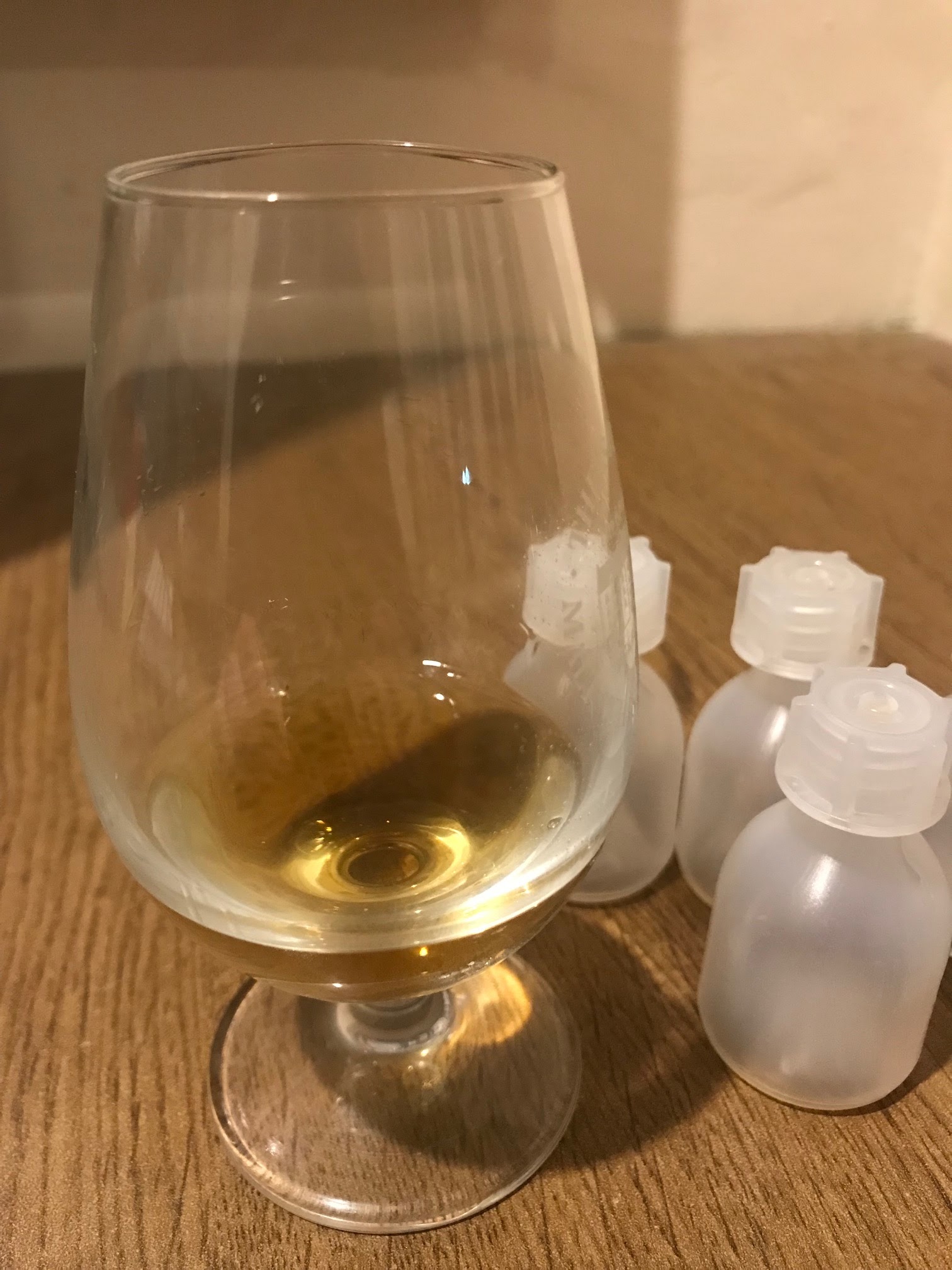
This was a Hector Macbeth. Another blended malt, this time from Hunter Laing, a company created as the 'other half' of the Laing business when the brothers when their separate ways almost a decade ago. A 24-year-old distilled in 1997, it was 51% and cost £128. Bourbon cask, which came as a bit of a surprised as we'd assumed a sherry cask given the rich colour (sadly I can't show this to you as I had drunk mine before remembering to take the photo, as you can see).

To the Highlands, a large whisky region including just about 'the rest' of Scotland that isn't covered by one of the other named areas, whether or not there are any actual hills nearby. Toffee and butterscotch on the nose of this one, almost like Werther's originals.

Mossburn
Certainly a bit of sweetness, almost like that heather honey so beloved of National Trust for Scotland gift shops. An easy drinker, it soon stopped being as fiery as it was at the start on the palate. A good one for round the campfire, someone suggested, with notes of dark chocolate, and a creamy, thick, mouthfeel. Others were less keen, though.

Another Bourbon cask, and another from Douglas Laing, this was an expression under their Timorous Beastie brand, called Meet The Beast. A no age statement blended malt, it was 54.9% and just £50. Great value, we felt.

That left just an island and an Islay to try, and with the peatiness of Islay inevitably kept for the end, it was off to a different island first. Still smoky though, peaty but very drinkable. It had a pleasant softness. As someone commented, "people who don't like peat would tolerate it." Better without the water we felt, with a hint of sweetness overall.

Big Peat Black Edition
This turned out to be a bottle under the Mossburn brand, from Torabhaig, the Isle of Skye's long-awaited second distillery (after Talisker). Called Signature Casks 1, it involved three different bits of cask wood in the ageing process. Another blended malt it was a no age statement dram at 46% and just £42. Really nice, we thought.

And so to Islay. To no great surprise, this had the typical medicinal character straight from the off. We also got salty, cough syrup, but perhaps not a wide range of sensations on the palate. "Not bad but not amazing" said someone, and others felt it was a touch one dimensional, by comparison to a few of the earlier drams.

This was a Big Peat, another of Douglas Laing's range of brands. Specifically, we had the Black Edition in our hands, a blend of Islay malts and a 27-year-old that was certainly different from the Big Peat we'd had previously. At 48.3% but a costly £185, we probably wouldn't necessarily be queuing up to buy it again.

That left only the dram of the night voting, and it was an easy win for... dram number 4! Meet the Beats took more than half the vote, with the Mossburn in second.

Thank you to Adam for preparing another great tasting for us, and to all club members for attending remotely and continuing to support us!

Thursday, August 26, 2021

Against The Grain: A Grain Whisky Special

The grain whisky line up

For our tasting in August, we looked at one of the more forgotten areas of Scottish whisky: grain whisky. Simply put, grain whisky refers to any whisky made in part from grains which aren't malted barley, and can include grains such as corn, wheat, maize and rye.

Holyrood
We started off with something from the new Holyrood distillery in Edinburgh, the Scottish capital's first new opening in a century. In fact, what we were drinking was not actually produced there, as it's only been up and running since 2019, but was instead called Sweet Single Grain, bottled under licence using the name 'Holyrood Spirits Merchants' although we don't know where the spirit itself was produced.

It smelt nice, with a good nose all round. Something distinctive in the aftertaste, but we couldn't quite place it at first, although there was a shout for butterscotch. Coats your mouth nicely. As someone said: "not all that much to say about it, but it's lovely." From an AHC - alligator heavy char - cask, a fact which might explain the sweetness we all got. This was 46% and was a very reasonable £39.50.

Bramble Whisky Co
Onto dram number two and one of the biggest grain distilleries in Scotland, the North British. Jointly owned by Diageo and Edrington Group, it has an annual output of about 12 million litres, most of which ends up in a variety of well-known blends.

This particular bottle was from a small indie, the Bramble Whisky Company, associated with a local bar. It was four-and-a-half years old, a virgin oak single cask and, like the first bottle, we got ours online from Royal Mile Whiskies. It had plenty going on. We got fruitcake, root liqourice, and a generally quite earthy flavour. Interesting, different, enjoyable, and certainly unusual. One drinker asked whether it was aged in Listerine barrels, although others felt it was a bit on the sickly side. It's £57 and 46%.

Invergordon
We were off next to another big old grain distillery. This time it was Invergordon, today part of Whyte and Mackay. And in a bit of a surprise, we soon learned that we had in our hands the oldest whisky ever tasted as part of a club event. It was a bottling of a whisky distilled back in 1972, making it a 48-year-old when it finally went into the bottle: a rarity for many of us members to have a dram older than them! It was the work of another independent bottler, this time Thompson Brothers.

Pear drops on the nose here. Vanilla, caramel and then a bit of fruit. Tropical fruit in fact, like pineapple or even peaches. Some thought it had a bit of a 'meh' finish to it, but others felt it improved after a few sips. A touch spicy maybe, thought someone. Although a good dram, we probably wouldn't pay the £270 price tag again! It was 42%.

Port Dundas
Port Dundas in Glasgow used to be another big name in grain distilling, until the distillery was closed and demolished a decade ago, as owner Diageo looked to consolidate its grain output at Cameronbridge (more of which in a moment). Adam had chosen for us one of the later bottlings from the distillery, a 2009 10-year-old under the Cooper's Choice name, a mixture of American oak and Martinique rum casks.

And very nice it was too.  Very pleasant and memorable was the consensus, along with "grassy" and "earthy". With water in it became really good, perhaps indicating it was bottled a little too strong. And by too strong, we mean a very chunky 60.5%. At £57 though, we felt this was a bit of a bargain, a more than reasonable price for something like this.

Cameronbridge
Port Dundas may have gone but Cameronbridge endures. Located in East Fife, it's the largest grain distillery in Europe, producing 200 litres of the good stuff every minute. And we had another older whisky to try, this time a 36-year-old bottled by Bartels Whisky under the name His Excellency. Indeed, it was a cask strength version of a bottle we'd had before.

This had the nicest nose so far. Caramel, chewy, toffee apple, even fizzy cider. A bit rummy on the nose, we got some sweetness and molasses. Chewy - that word again - when tasted, a bit of water brought out more of the flavour. The finish was perhaps a little harsh, but was also thick and oily. For plenty of members, the clear favourite so far. It was 57.9% and cost us £78.

Loch Lomond

To finish, we took the high road, or perhaps by this time of the night it was more like the low road, to Loch Lomond. The distillery is known for being self-sufficient, in so far as it has its own malt and grain distillery. And we were trying a peated version of the Loch Lomond Single Grain.

This had an interesting nose. Irn Bru, fruits and spices, and just a bit peaty or smoky. A rabbit out of the hat suggested someone, and quite a few really enjoyed this. It's unusual to have a peaty grain, and on this occasion we were drinking what was effectively a single malt, but which was not distilled in the batch process but was instead made using the continuous Coffey still method so technically doesn't count as a single malt under Scottish rules. More's the pity, as not only was this a very good whisky, it was a total bargain at just £26. It's 46%.

And so we came to the dram of the night voting. And in an unprecedented development, we had a five-way tie! All the drams from two to six got the same number of votes, so we left it at that rather than trying to force a winner.

Thanks to all members for taking part via Zoom once again, and to Adam for selecting and running us through another great selection of drams!